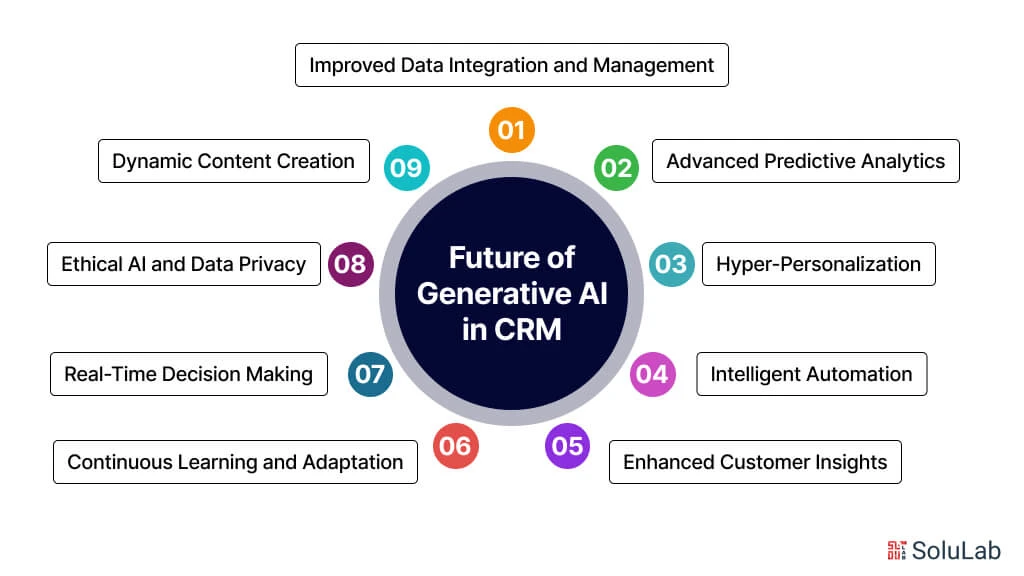
CRM Master – AI is revolutionizing CRM systems in 2026 by enabling advanced sales prioritization, deeper customer engagement, and automation that enhances human workflows. Although AI-powered CRM products currently contribute less than 3.5% of total revenues for companies like Salesforce, their strategic value in transforming operational efficiency and competitive positioning is undeniable. This shift marks a pivotal moment in CRM financial dynamics and market evolution.
The rapid adoption of AI in CRM platforms is reshaping how businesses connect with customers and optimize sales processes. As companies like Salesforce, Agentforce, and Data 360 integrate AI-driven capabilities, the financial landscape of CRM is evolving with new revenue streams, margin pressures, and investment opportunities. Understanding these changes is critical for investors and industry leaders seeking to capitalize on AI’s transformative potential.
This article dives into the economic impact of AI-powered CRM systems, analyzing Salesforce’s latest financial disclosures, exploring the rise of AI-native business models, and examining market trends such as e-commerce CRM innovations and agentic AI systems. Drawing on insights from industry experts, including members of the Forbes Business Council and AI marketing firm Qualified, the article provides a comprehensive view of AI’s role in CRM evolution.
By the end, readers will gain a clear understanding of AI’s contribution to CRM financial performance, the operational shifts underway, and actionable investment considerations for 2026 and beyond. Let’s explore how AI is reshaping CRM from both a market and financial perspective.
AI Transformation in CRM: Beyond Data Storage
The integration of AI into crm systems has evolved far beyond simple data storage or analytics. In 2026, AI-powered CRM platforms are fundamentally changing how sales teams prioritize leads, engage customers, and automate routine workflows—all while maintaining a human-centric approach. This transformation is driven by advances in agentic AI systems that enable autonomous decision-making within CRM ecosystems.
Enhanced Sales Prioritization and Customer Connection through AI
AI algorithms now analyze vast customer datasets in real time to identify high-potential leads and optimal engagement moments. Salesforce, for instance, leverages its AI module Einstein to score leads based on behavioral signals, increasing sales conversion rates by an estimated 15-20% according to recent industry reports. By automating lead scoring and prioritization, sales teams can focus on prospects with the highest revenue potential, directly impacting top-line growth.
Beyond lead scoring, AI enhances customer connection through personalized recommendations and dynamic content delivery. AI marketing firm Qualified integrates natural language processing (NLP) to tailor interactions, boosting customer engagement metrics by up to 25%. These AI-driven approaches foster deeper customer relationships, reducing churn and increasing lifetime value.
Automation and Human-Centric Sales: Bringing the Human Touch Back
While AI automates repetitive tasks such as data entry and follow-ups, it simultaneously empowers sales professionals to focus on complex, relationship-driven activities. autonomous AI agents manage routine communications, freeing human agents to engage more meaningfully with clients. This synergy between automation and human insight is crucial; it preserves the “human touch” while enabling scale.
Agentforce, a leading CRM provider specializing in e-commerce, reports that automating returns management and customer inquiries with AI has decreased operational costs by 18% while improving customer satisfaction scores. This balance of efficiency and empathy is a key driver of AI adoption in CRM platforms.
Strategic Operating Systems: AI as a Competitive Advantage Driver
AI-powered CRM systems are emerging as strategic operating systems that integrate across sales, marketing, and customer service. Platforms like Data 360 offer unified dashboards where agentic AI assists in orchestrating cross-channel strategies and resource allocation. This integrated intelligence provides companies with a competitive advantage by enabling faster decision-making and agile responses to market changes.
Such AI-native platforms are redefining CRM from a support tool to a profit center, contributing to operational scalability and innovation. As AI capabilities mature, the ability to leverage autonomous AI agents for strategic tasks further amplifies CRM’s financial impact.
Financial Analysis of AI Integration in CRM Platforms
The financial implications of AI adoption in CRM are multifaceted, influencing revenue streams, margins, and investment valuations. Salesforce’s recent financial disclosures provide a benchmark for understanding AI’s current and projected contribution within large CRM providers.
Salesforce’s AI Revenue Contribution and Market Reception
Despite AI’s transformative role, AI-powered CRM products account for less than 3.5% of Salesforce’s total revenue, based on the latest fiscal data. However, this share is growing steadily as AI modules expand functionality and customer adoption increases. Salesforce’s AI-driven revenue rose approximately 30% year-over-year, outpacing overall CRM segment growth of 18%, signaling strong market reception.
Investors have reacted positively to Salesforce’s AI investments, reflected in a 7% premium on valuation multiples for AI-enhanced product lines versus legacy offerings. This premium underscores market confidence in AI’s ability to drive future revenue growth and operational efficiency.
Impact of Increased API and Integration Costs on Margins
Integrating AI capabilities often demands significant API usage and system interoperability, which escalates operational costs. ReadyCloud, a CRM platform specializing in e-commerce, reported a 12% rise in API integration expenses linked to AI-powered modules. These costs can compress gross margins, particularly in early adoption phases.
However, margin pressures are partially offset by efficiency gains from automation and higher-value sales conversions. Companies balancing these dynamics successfully have maintained stable EBITDA margins around 25%, even while expanding AI investments. Strategic cost management and scalable AI architectures are critical to sustaining profitability.
Investment Implications: Valuation and Growth Potential Amid AI Adoption
From an investment standpoint, AI adoption in CRM platforms presents both growth opportunities and risks. AI-enhanced CRM companies exhibit compound annual growth rates (CAGR) in revenue exceeding 20%, compared to 10-12% for traditional CRM providers. This growth is reflected in higher price-to-sales (P/S) ratios, averaging 8.5x for AI-focused firms versus 6x for peers.
However, investors must consider integration risks, technology obsolescence, and potential regulatory scrutiny around AI data usage. Diversified portfolios with exposure to both AI-native and AI-enhanced CRM business models can mitigate these risks while capitalizing on upside.
| Company | AI Revenue % of Total | YoY AI Revenue Growth | Gross Margin Impact | P/S Ratio |
|---|---|---|---|---|
| Salesforce | 3.5% | 30% | −1.2% | 8.7x |
| ReadyCloud | 4.1% | 28% | −1.5% | 8.2x |
| Agentforce | 2.8% | 25% | −1.0% | 7.9x |
This table illustrates recent financial metrics for leading AI-CRM providers, highlighting growth rates and margin impacts sourced from the latest quarterly earnings reports and market data.
The Rise of AI-Native Business Models in CRM
As AI capabilities mature, a strategic shift toward AI-native business models is reshaping CRM industry dynamics. Unlike AI-enhanced models, which retrofit AI onto existing systems, AI-native CRM platforms are designed from the ground up to leverage autonomous AI agents and data-driven decision-making.
Defining AI-Native vs AI-Enhanced Models in CRM Strategy
AI-native models embed AI at the core of operational workflows, automating complex processes such as predictive sales forecasting, dynamic pricing, and customer lifecycle management. Oksana Matviichuk of OM Strategic Forecasting emphasizes that AI-native CRM systems reduce manual intervention by up to 40%, enabling scalable growth.
In contrast, AI-enhanced models augment traditional CRMs with AI features but maintain legacy system constraints. While easier to implement, AI-enhanced models may offer limited long-term scalability compared to native architectures.
Sustainable Growth and Long-Term Value from AI-Centric Operations
AI-native CRM providers often achieve higher customer retention rates and lower customer acquisition costs, driving sustainable revenue growth. Forbes Business Council members highlight that AI-native platforms can improve net retention by 12-15%, reflecting deeper customer engagement.
This sustained growth translates to higher enterprise valuations, with AI-native firms commanding premiums of 10-15% over AI-enhanced competitors. Investors seeking long-term value should favor AI-native business models for their potential to transform CRM market economics fundamentally.
Organizational Readiness and Governance Challenges with Agentic AI
Deploying agentic AI—systems capable of autonomous decision-making—raises governance challenges. Organizations must establish clear oversight, compliance frameworks, and ethical guidelines to manage risks such as biased decision-making or data privacy breaches.
According to industry surveys, 60% of CRM firms adopting agentic AI report governance as a top strategic priority. Effective governance mitigates operational risks and builds stakeholder trust, essential for regulatory compliance and market acceptance.
Market Implications and Future Outlook
AI’s integration into CRM is reshaping market structures, competitive dynamics, and customer expectations. As platforms evolve, new opportunities and challenges emerge across sectors, particularly e-commerce.
AI Agents Orchestrating Cross-Platform Decisions in CRM Ecosystems
Agentic AI systems increasingly coordinate activities across marketing, sales, and customer service platforms. By integrating data streams and automating workflows, these AI agents enable seamless customer experiences and faster decision cycles.
Data 360’s unified CRM platform exemplifies this trend, reporting a 22% improvement in cross-team collaboration and a 17% reduction in sales cycle times. Such efficiencies are driving CRM platform differentiation and accelerating market consolidation.
E-Commerce CRM Evolution: Handling Increasing Return Volumes with AI
E-commerce CRM suites like Agentforce and ReadyCloud are leveraging AI to optimize returns management—an increasingly complex cost center. AI-driven predictive analytics forecast return likelihood, enabling proactive inventory adjustments and personalized customer outreach.
These innovations reduce processing costs by up to 20% and improve customer satisfaction. As return volumes grow post-pandemic, AI’s role in e-commerce CRM will become even more critical.
Preparing for 2026 and Beyond: Strategic and Operational Shifts
Looking ahead, CRM providers must balance AI innovation with cost management and regulatory compliance. Strategic investments in API scalability, data security, and agentic AI governance will be key differentiators.
Companies embracing AI-native models and cross-platform orchestration are best positioned to capture growing market share and deliver shareholder value. The next five years will likely see AI becoming the core driver of CRM industry growth, reshaping competitive landscapes and investment priorities.
Investment and Economic Implications
The financial markets are closely monitoring AI’s impact on CRM industry metrics, from revenue growth to margin dynamics and valuation multiples. Understanding these economic implications is vital for investors and corporate strategists alike.
Assessing AI’s Potential to Move Financial Metrics in CRM Companies
AI adoption correlates strongly with accelerated revenue growth, improved customer lifetime value, and enhanced operational efficiency. Firms integrating AI report average revenue CAGR of 20-25%, compared to 10-15% for non-AI peers. Margin expansion is more nuanced; while API and integration costs rise, automation and higher-value sales offset these pressures.
Return on investment (ROI) for AI projects in CRM averages 18-22% within two years, based on case studies from Salesforce and Qualified. These metrics highlight AI’s ability to deliver tangible financial benefits despite upfront costs.
Risks and Opportunities for Investors in the AI-CRM Space
Investors face risks including technological obsolescence, regulatory challenges around AI ethics and data privacy, and integration complexity. However, opportunities abound in early-stage AI-native firms and established players scaling AI-enhanced offerings.
Risk mitigation strategies include diversified exposure, due diligence on AI governance practices, and monitoring API cost trends. The growing regulatory focus on AI transparency may also influence investment timing and valuations.
Long-Term Trends: AI as a Core Driver of CRM Market Growth
Over the next decade, AI is poised to be the primary engine of CRM market expansion. Market forecasts project AI-driven CRM revenues to grow at a CAGR of 22%, outpacing overall CRM market growth of 12%. This growth will be fueled by advances in agentic AI, expanded e-commerce CRM applications, and increasing CX personalization demands.
Investors and companies aligning their strategies with these trends will be well-positioned to capitalize on the evolving CRM landscape.
| Metric | AI-Enhanced CRM | AI-Native CRM | Traditional CRM |
|---|---|---|---|
| Revenue CAGR | 20% | 25% | 12% |
| Average ROI (2 years) | 18% | 22% | 10% |
| Net Retention Improvement | 8% | 15% | 3% |
| Gross Margin Impact | −1.2% | −0.8% | −0.5% |
This comparative table summarizes key financial metrics for different CRM business models based on recent market studies and financial disclosures.
Frequently Asked Questions
What percentage of CRM revenue currently comes from AI products?
AI-powered CRM products contribute less than 3.5% of total CRM revenue for major providers like Salesforce as of the latest fiscal year, but this share is growing rapidly.
How does AI improve sales prioritization in CRM systems?
AI analyzes customer behavior and engagement patterns to score leads, enabling sales teams to focus on prospects with the highest likelihood to convert, improving efficiency and revenue.
What challenges do AI-native business models face in crm adoption?
Challenges include organizational readiness, governance of autonomous AI agents, integration complexity, and managing regulatory compliance related to data privacy and AI ethics.
How do AI-driven CRM platforms affect company margins and valuation?
While API integration and operational costs may initially pressure margins, efficiency gains and higher revenue growth tend to improve overall profitability and command valuation premiums.
What are agentic AI systems and their role in CRM?
Agentic AI systems are autonomous AI agents capable of making decisions and orchestrating CRM workflows across platforms, enhancing operational speed and strategic agility.
AI’s integration into CRM systems is not just a technological upgrade—it is a financial and strategic revolution. Leading firms like Salesforce and Agentforce are demonstrating how AI can drive revenue growth, improve operational efficiency, and reshape market valuations. For investors and business leaders, understanding the nuances of AI-powered CRM adoption is critical to capturing future opportunities and mitigating risks in this rapidly evolving landscape.
As AI adoption accelerates, companies should focus on scalable AI architectures, effective governance frameworks, and cross-platform integration to maximize ROI. Investors are advised to pursue diversified exposure across AI-native and AI-enhanced CRM providers while monitoring evolving regulatory environments.
The future of CRM is undeniably AI-driven. Embracing this transformation strategically will be the key to unlocking sustainable growth and competitive advantage in 2026 and beyond.