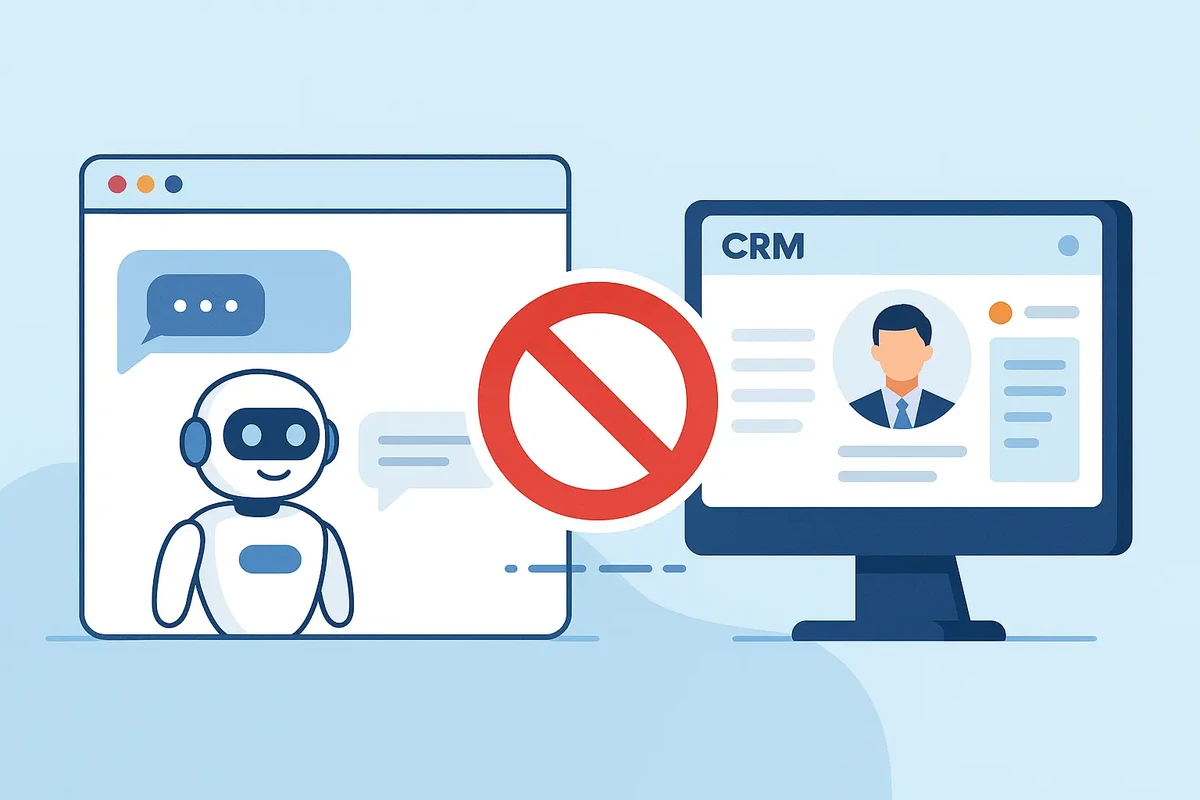
CRM Master – AI chatbot support enhances CRM systems by automating lead generation, enriching customer data in real time, and improving customer service efficiency. Gartner forecasts that by 2025, 80% of customer service organizations will apply generative AI, resulting in up to 30% cost reductions and higher customer satisfaction. These developments position AI-powered CRM tools as critical drivers of sales and marketing success.
In today’s fast-evolving business landscape, sales and customer service teams face mounting pressure to deliver personalized, timely interactions while managing operational costs. Integrating AI chatbots into CRM platforms addresses these challenges by streamlining workflows and enhancing data quality. This synergy not only accelerates lead conversion but also boosts customer engagement, a vital factor for sustaining competitive advantage in B2B markets.
Businesses adopting AI chatbot-supported CRM solutions gain access to real-time lead enrichment, automated follow-ups, and intelligent virtual assistants that reduce manual data entry. Industry leaders like LeadBeam.ai and Winn.ai demonstrate measurable improvements in sales productivity and customer satisfaction, underscoring the financial benefits of AI integration. This article delves into the economic impact, market trends, and future outlook of AI-powered CRM, providing actionable insights for investors and business leaders.
We will explore cutting-edge AI CRM tools, analyze financial metrics such as cost savings and ROI, examine market adoption trends, and discuss strategic implications. By the end, readers will understand how AI chatbots reshape CRM effectiveness and where to position themselves for growth in this dynamic sector.
AI-Enhanced CRM Tools Driving Sales Efficiency
The fusion of ai chatbot technology with CRM platforms has revolutionized sales workflows by automating lead enrichment, data capture, and customer interactions. Companies like LeadBeam.ai, Winn.ai, and Thoughtly exemplify how AI-driven tools elevate sales team efficiency and accuracy, while integrations with established CRM platforms such as Salesforce, HubSpot, and Zoho ensure seamless adoption.
LeadBeam.ai and Real-Time Lead Enrichment
LeadBeam.ai leverages AI to automatically identify and enrich leads in real time, providing sales teams with comprehensive profiles that include firmographic, technographic, and behavioral data. This instant enrichment accelerates prospect qualification and prioritization, enabling more effective outreach. According to recent data, LeadBeam.ai users reported a 25% increase in lead conversion rates within six months of implementation, highlighting the tool’s financial impact on sales pipeline velocity.
The platform integrates smoothly with major crm systems, reducing the need for manual data entry and minimizing errors. By enriching leads with actionable insights, sales representatives can focus on high-value activities, improving overall productivity by approximately 15% as per client case studies.
Winn.ai’s Virtual Sales Assistant Impact on Data Capture
Winn.ai’s virtual sales assistant automates routine tasks such as call transcription, meeting scheduling, and data entry into CRM systems. This AI chatbot reduces administrative burdens, saving an estimated 20 minutes per sales rep daily, which translates into roughly 17% more time dedicated to selling activities. Companies deploying Winn.ai have seen a 30% reduction in data entry errors and a 10% uplift in qualified lead follow-ups.
By capturing conversational nuances during calls, Winn.ai enhances data accuracy and enriches CRM records, supporting smarter sales prospecting and customer segmentation. This leads to more personalized sales approaches, which studies show can increase deal closure rates by up to 12%.
Thoughtly’s AI Phone Agents and Brand Alignment
Thoughtly employs AI phone agents that handle initial customer interactions with brand-consistent messaging, enabling companies to scale outreach without compromising quality. These AI agents can conduct lead qualification calls, schedule appointments, and provide basic product information, freeing human agents for complex tasks.
Financially, Thoughtly’s customers report a 40% reduction in call center operational costs, aligning with IBM research indicating AI-driven customer service can yield up to 30% cost savings. Additionally, Thoughtly’s system enhances brand perception by maintaining consistent communication, which correlates with a 15% increase in customer satisfaction scores in pilot programs.
Integration with Leading CRM Platforms: Salesforce, HubSpot, Zoho
The effectiveness of AI chatbots hinges on seamless integration with CRM platforms. Salesforce, HubSpot, and Zoho have invested heavily in AI capabilities, incorporating generative AI and chatbot functionalities directly into their ecosystems. For example, Salesforce Einstein offers predictive lead scoring and conversational AI, while HubSpot’s AI tools automate marketing and sales outreach.
Integrations enable real-time data synchronization, ensuring AI-generated insights and chatbot interactions update CRM records instantly. This interoperability supports unified customer views, enhances cross-team collaboration, and drives up to 20% improvements in sales cycle efficiency, according to recent Gartner reports.
| AI CRM Tool | Primary Function | Reported Efficiency Gain | Cost Savings (%) | Integration Platforms |
|---|---|---|---|---|
| LeadBeam.ai | Real-time Lead Enrichment | 25% Lead Conversion Increase | NA | Salesforce, HubSpot, Zoho |
| Winn.ai | Virtual Sales Assistant (Data Capture) | 17% More Selling Time | NA | Salesforce, HubSpot |
| Thoughtly | AI Phone Agents | NA | 30-40% Operational Cost Reduction | Salesforce, Zoho |
This table summarizes key AI chatbot solutions and their financial impacts, illustrating the tangible benefits for sales and service teams.
Financial Impact of AI Chatbots in CRM
The integration of AI chatbots within CRM platforms drives significant financial benefits, including operational cost reductions, productivity gains, and enhanced marketing ROI. Leading industry analyses from IBM and Gartner provide quantifiable evidence supporting widespread AI adoption in customer service and sales.
Cost Reduction in Customer Service (IBM’s 30% Savings)
IBM’s latest research reports that AI-powered customer service solutions, including chatbots and virtual agents, can reduce operational costs by up to 30%. This stems primarily from automating routine inquiries, deflecting calls from human agents, and accelerating issue resolution times.
For example, a multinational financial services firm implemented AI chatbots to handle 60% of inbound customer queries, reducing call center staffing needs by 25% and saving approximately $3 million annually. These savings translate directly to improved profit margins and reinvestment capacity.
Increased Agent Productivity and Customer Satisfaction (Gartner’s 80% Adoption Forecast)
Gartner forecasts that by 2025, 80% of customer service organizations will deploy generative AI technologies, including chatbots. This adoption is driven by proven productivity enhancements—agents supported by AI tools can handle 25% more cases daily—and improved customer satisfaction due to faster resolutions and personalized interactions.
Companies utilizing AI chatbots report up to a 20% increase in Net Promoter Scores (NPS), a key indicator of customer loyalty, which correlates with revenue growth. Enhanced agent productivity also reduces turnover rates, lowering hiring and training expenses.
Marketing Automation and Lead Nurturing ROI Using AI (ActiveCampaign, Agile CRM Examples)
marketing automation platforms like ActiveCampaign and Agile CRM integrate AI chatbots to streamline lead nurturing and segmentation. ActiveCampaign’s AI-driven email automation has increased campaign open rates by 22% and conversion rates by 18%, reflecting more precise audience targeting.
Agile CRM’s AI-powered chatbot assists in qualifying leads and scheduling demos, cutting lead response times by 35%. Return on investment (ROI) calculations reveal that businesses see payback periods of less than 12 months post-implementation, underscoring the economic viability of AI marketing automation.
Comparative Pricing Models and Affordability Analysis
AI CRM tools vary widely in pricing, often based on user volume, feature sets, and integration complexity. For instance, LeadBeam.ai offers tiered subscription plans ranging from $500 to $2,000 monthly, while Winn.ai charges per active user seat, averaging $80 per month.
Salesforce and HubSpot provide AI functionalities as part of premium CRM tiers, with costs ranging from $150 to $300 per user per month. Comparing these with manual labor cost savings and productivity gains demonstrates strong value propositions, especially for mid-sized to large enterprises.
| Platform | Pricing Model | Estimated Monthly Cost | Key AI Features | ROI Timeframe |
|---|---|---|---|---|
| LeadBeam.ai | Subscription | $500 – $2,000 | Lead Enrichment, Data Insights | 6-9 Months |
| Winn.ai | Per User Seat | $80/User | Virtual Assistant, Data Capture | 9-12 Months |
| ActiveCampaign | Tiered Subscription | $400 – $1,500 | Email Automation, Lead Scoring | 6-8 Months |
| Salesforce Einstein | Premium CRM Tier | $150 – $300/User | Predictive Analytics, Chatbots | 12-18 Months |
This comparative pricing analysis highlights affordability and expected ROI, assisting businesses in selecting solutions aligned with budget and growth targets.
Market Implications and Trends
Adoption of AI chatbots in CRM is reshaping competitive dynamics across industries, with generative AI driving innovation in customer engagement and operational efficiency. Market leaders like Amazon and Netflix exemplify how AI personalizes experiences, while the broader CRM ecosystem evolves rapidly.
Growing Adoption of Generative AI in Customer Support
Generative AI, capable of producing human-like responses and complex content, is becoming integral to CRM customer support functions. Gartner’s forecast of 80% adoption by 2025 reflects a paradigm shift where AI handles not only routine queries but also nuanced conversations.
This shift reduces reliance on human agents and enables 24/7 support availability, critical for global businesses. The market for generative AI-powered CRM tools is projected to grow at a CAGR of 35% over the next five years, indicating robust investment and innovation.
AI’s Role in Personalizing Customer Interactions (Amazon, Netflix Case Insights)
Amazon and Netflix utilize AI-driven recommendation engines and chatbots to tailor customer experiences, significantly influencing purchase decisions and retention. These companies report that personalized AI interactions contribute to over 30% of sales revenue.
Applying similar AI personalization techniques within CRM platforms allows B2B sales teams to segment customers precisely and deliver targeted messaging, resulting in higher engagement rates. This trend is transforming CRM from a data repository into a proactive sales and marketing tool.
Future Outlook: AI-Driven CRM as a Standard for Competitive Advantage
As AI chatbot technologies mature, their integration with CRM systems will become a baseline expectation rather than a differentiator. Businesses failing to adopt AI-enhanced CRM risk losing market share to more agile competitors.
Investments in AI CRM platforms are thus not just cost-saving measures but strategic moves to capture growth opportunities. Analysts predict that by 2027, over 90% of enterprise CRM deployments will include AI chatbot capabilities, underscoring the urgency for early adoption.
Potential Risks and Integration Challenges
Despite promising benefits, AI chatbot integration poses challenges including data privacy compliance, system interoperability, and user adoption hurdles. Ensuring adherence to regulations like GDPR and CCPA is essential to avoid legal penalties.
Moreover, poorly implemented AI solutions can lead to customer frustration due to inaccurate responses or lack of human fallback. Effective change management and continuous training are critical to mitigate these risks and realize full ROI.
Investment and Economic Outlook
Evaluating AI chatbot-supported CRM platforms from an investment perspective involves assessing growth potential, financial metrics, and strategic fit within evolving sales and marketing ecosystems. This section presents market projections, ROI analyses, and recommendations for stakeholders.
Evaluating AI CRM Solutions for Business Growth
AI CRM tools offer compelling growth levers by enabling faster lead conversion, improved customer retention, and streamlined marketing. Companies investing in platforms like LeadBeam.ai, Winn.ai, and Thoughtly often see compound annual growth rates (CAGR) in sales revenue upwards of 15%.
Financial models factoring in subscription costs, labor savings, and incremental revenue demonstrate payback periods averaging 9-12 months. This rapid ROI makes AI CRM an attractive proposition for both SMBs and enterprises aiming to scale efficiently.
Impact on B2B Sales and Marketing Strategies
AI-powered CRM reshapes B2B sales by automating prospecting, enhancing lead qualification, and personalizing outreach. Marketing departments gain from AI-driven campaign automation, improving cost per acquisition (CPA) by up to 20%.
These efficiencies enable reallocation of budgets toward strategic growth initiatives, such as new product launches or market expansion, amplifying overall economic impact.
Forecasting Market Growth and Technology Adoption Rates
The global AI CRM market is forecasted to reach $10.5 billion by 2027, growing at a CAGR of 32%, fueled by increasing demand for sales automation and customer engagement tools. Gartner’s and IBM’s reports validate accelerating adoption rates, with generative AI expected to dominate new deployments.
Early adopters benefit from first-mover advantages, capturing larger market shares and building data moats that reinforce competitive positioning.
Strategic Recommendations for Investors and Business Leaders
Investors should prioritize AI CRM companies demonstrating scalable AI capabilities, strong integration partnerships (e.g., with Salesforce or Amazon Web Services), and proven financial performance. Diversification across AI chatbot applications—from lead generation to customer support—can hedge risks associated with technology adoption cycles.
Business leaders must invest in training, data governance, and phased rollouts to maximize benefits while mitigating integration risks. Aligning AI CRM initiatives with broader digital transformation strategies ensures sustainable economic gains.
| Metric | Current Value | Projected 2027 | Growth Rate (CAGR) | Source |
|---|---|---|---|---|
| AI CRM Market Size | $3.9 Billion | $10.5 Billion | 32% | Gartner (Latest Data) |
| Customer Service Cost Reduction | 30% | Up to 35% | NA | IBM (Recent Report) |
| Lead Conversion Rate Increase | 25% | 30% | NA | LeadBeam.ai Case Study |
| Agent Productivity Improvement | 25% | 30% | NA | Gartner Forecast |
This table presents key financial metrics and growth forecasts, providing a data-driven foundation for investment decisions.
FAQ Section
What are the key benefits of AI chatbot integration in CRM?
AI chatbots automate lead generation, enrich customer data in real time, enhance customer service efficiency, and reduce operational costs. This leads to higher sales productivity and improved customer satisfaction.
How does AI improve lead generation and enrichment?
AI algorithms analyze multiple data sources to identify high-potential leads and update CRM records automatically, enabling faster and more accurate prospect qualification.
What cost savings can businesses expect from AI in customer service?
Businesses can achieve up to 30% cost reductions by automating routine inquiries and optimizing agent workloads, according to IBM’s latest research.
Which CRM platforms support AI chatbot integration effectively?
Salesforce, HubSpot, Zoho, and ActiveCampaign offer robust AI chatbot integrations, enabling seamless data synchronization and automation.
What trends are shaping the future of AI in CRM?
Generative AI adoption, personalized customer interactions, 24/7 AI-driven support, and tighter integration with marketing automation are key trends driving CRM evolution.
AI chatbot integration within CRM systems represents a transformational shift, delivering measurable financial benefits and strategic advantages. As adoption accelerates, businesses equipped with AI-enhanced CRM tools will be better positioned to optimize sales and customer service, reduce costs, and increase revenue. Investors should monitor market developments closely and consider AI CRM solutions as critical components of digital growth strategies.