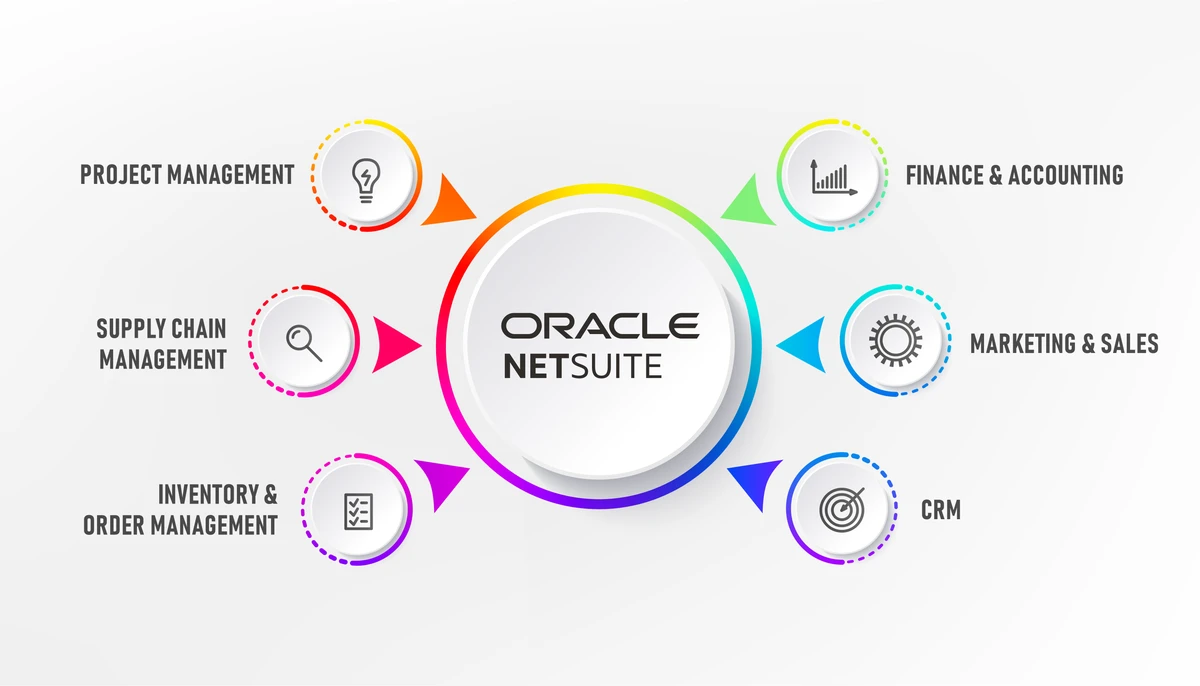
CRM Master – Oracle’s NetSuite Cloud ERP is a pivotal growth engine within Oracle’s broader cloud strategy, recently surpassing $1 billion in quarterly revenues and achieving a 16% year-over-year increase. By integrating over 100 AI agents, NetSuite enhances SaaS scalability and streamlines financial reporting, positioning Oracle’s cloud segment for an expected 29% growth to $31.6 billion in fiscal 2026. This fusion of cloud infrastructure and AI-driven analytics is redefining enterprise resource planning for mid-market businesses globally.
In today’s rapidly evolving cloud ERP landscape, companies must navigate complex market dynamics shaped by technological innovation and shifting customer demands. Oracle’s NetSuite ERP offers a compelling solution by combining cloud-native agility with advanced AI capabilities tailored for mid-sized enterprises. Understanding how NetSuite’s financial performance and strategic positioning influence market trends and investment decisions is crucial for stakeholders aiming to capitalize on this growth trajectory.
This article delves into a detailed financial analysis of Oracle NetSuite, exploring revenue milestones, SaaS business drivers, and AI integration impacts. We will also examine competitive positioning against ERP providers like SAP, analyze market implications for mid-market adoption, and assess future growth prospects supported by data from Gartner, Zacks Investment Research, and Oracle’s fiscal disclosures. By unpacking these elements, readers will gain actionable insights into NetSuite’s role in shaping the enterprise cloud market and practical guidance for investment or operational strategies.
Through a structured exploration—from financial data to market implications and future outlook—this comprehensive review offers a nuanced understanding of Oracle NetSuite ERP’s economic impact and innovation leadership in the cloud ERP domain.
Financial Data Analysis of Oracle NetSuite ERP
Oracle’s NetSuite division has demonstrated robust financial momentum, crossing a significant revenue milestone by exceeding $1 billion in recent quarterly revenues. This achievement reflects a 16% year-over-year growth rate, underscoring NetSuite’s expanding footprint in the cloud erp market. Oracle’s broader cloud revenue performance complements this growth, with projections indicating a 29% year-over-year increase to $31.6 billion in fiscal 2026, driven largely by SaaS and cloud infrastructure services.
Revenue Growth and Market Share
NetSuite’s $1 billion revenue milestone is a testament to its successful penetration of mid-market enterprise segments. This growth is not isolated; Oracle’s total cloud revenue, encompassing SaaS, Platform as a Service (PaaS), and Infrastructure as a Service (IaaS), is forecasted to reach $31.6 billion, a 29% increase from the previous fiscal year. SaaS revenue, a critical component of this mix, benefits substantially from NetSuite’s cloud-native ERP offerings, which streamline financial management and operational efficiencies.
Recent data from Oracle’s fiscal reports reveal that NetSuite’s revenue constitutes a growing share of Oracle’s overall cloud business, signaling its strategic importance. This trend is supported by Zacks Investment Research’s consensus estimates projecting Oracle’s total revenue at $66.6 billion with a 19.38% growth rate, reflecting sustained market confidence.
SaaS Business Acceleration Drivers
Central to NetSuite’s growth is the integration of over 100 AI agents embedded within its ERP platform. These AI-powered tools enhance financial forecasting, automate routine processes, and improve decision-making accuracy for customers. High renewal rates, often exceeding 90%, indicate strong customer satisfaction and stickiness, which further accelerates recurring SaaS bookings.
Moreover, Oracle’s cloud infrastructure investments provide the scalability necessary to support NetSuite’s expanding user base. The elasticity of Oracle’s cloud services ensures seamless performance during peak demands, reinforcing NetSuite’s value proposition for mid-market enterprises seeking both reliability and innovation.
| Metric | Latest Data | Year-over-Year Growth | Source |
|---|---|---|---|
| NetSuite Quarterly Revenue | $1.02 Billion | 16% | Oracle Fiscal Reports Q1 2025 |
| Oracle Cloud Revenue (Annual) | $31.6 Billion (Projected) | 29% | Zacks Investment Research 2025 Forecast |
| Oracle Total Revenue | $66.6 Billion (Projected) | 19.38% | Zacks Investment Research 2025 Forecast |
| SaaS Renewal Rate | Over 90% | N/A | Oracle Investor Relations |
Market Implications and Competitive Positioning
oracle netsuite’s focus on mid-market enterprises addresses a lucrative yet competitive segment within the cloud ERP ecosystem. With mid-sized companies increasingly adopting cloud solutions to replace legacy systems, NetSuite’s cloud-native architecture and AI-enhanced capabilities provide a strategic advantage. However, this market is also experiencing saturation and intensified competition from other ERP vendors like SAP and emerging SaaS providers.
Mid-Market Focus and Addressable Market Size
NetSuite’s strategy centers on delivering scalable ERP solutions optimized for mid-sized businesses, which historically faced challenges with complex on-premise systems. The mid-market erp segment is estimated to be worth tens of billions globally, representing a substantial growth opportunity. Oracle’s integrated AI features, such as advanced analytics and automation, resonate with mid-market CFOs seeking to improve financial visibility and operational agility.
Despite strong adoption rates, challenges remain, including the need to customize solutions for diverse industries and the ongoing risk of churn in a competitive SaaS environment. Oracle’s continuous cloud infrastructure enhancements aim to mitigate these challenges by ensuring high availability and performance.
Comparison with SAP and Other ERP Providers
When contrasted with SAP Business One and other ERP providers, Oracle NetSuite’s cloud-native design offers distinct advantages. SAP’s offerings include strong on-premise options, appealing to enterprises hesitant to migrate fully to the cloud. However, NetSuite’s AI-driven supply chain management and business automation capabilities present a more modern, flexible alternative.
NetSuite’s embedded AI agents enable predictive analytics and streamlined workflows, features increasingly demanded by customers prioritizing digital transformation. Gartner’s recent Magic Quadrant for Cloud ERP recognized NetSuite as a leader in AI-powered ERP solutions, highlighting its innovation edge over competitors.
Gartner Recognition and Industry Leadership
Gartner’s endorsement of NetSuite as a leader in AI-powered ERP reporting and decision-making reinforces its market credibility. This recognition is based on NetSuite’s ability to integrate financial analytics seamlessly with operational data, facilitating real-time insights for enterprise users. Gartner also noted NetSuite’s strong customer satisfaction ratings and its growing ecosystem of AI-enhanced analytics tools, which are key differentiators in the cloud ERP market.
| Feature | Oracle NetSuite | SAP Business One | Remarks |
|---|---|---|---|
| Deployment Model | Cloud-native SaaS | Hybrid (Cloud + On-premise) | NetSuite leads in cloud agility |
| AI Integration | 100+ AI agents embedded | Limited AI modules | NetSuite stronger in AI-driven automation |
| Target Market | Mid-market enterprises | Small to mid-market, some large | Overlap but different cloud focus |
| Supply Chain Management | AI-powered predictive analytics | Traditional SCM modules | NetSuite offers advanced AI features |
| Customer Satisfaction | High (90%+ renewals) | Moderate | NetSuite edges on retention |
Future Outlook and Investment Implications
Oracle’s NetSuite ERP is poised for continued growth, supported by a comprehensive cloud strategy and an expanding AI innovation roadmap. Financial projections suggest strong revenue trajectories, but investors should be mindful of potential risks and market challenges.
Expected Revenue Trajectory and Cloud Strategy
According to the latest consensus from Zacks Investment Research, Oracle’s total revenue is expected to reach $66.6 billion with a 19.38% growth rate, while cloud revenue alone is projected to increase 29% to $31.6 billion. NetSuite’s role as a core SaaS driver is pivotal within these figures, fueled by global data center expansions and ongoing AI feature rollouts.
Oracle’s cloud infrastructure investments enable NetSuite to scale efficiently, supporting enterprise clients’ growth and complex ERP demands. This scalability is critical as more mid-sized organizations transition to cloud ERP solutions, seeking cost-effective, AI-enhanced platforms.
Risks and Growth Challenges
Despite promising growth, NetSuite faces risks including market saturation in the mid-market segment and intensifying competition from both established ERP vendors and emerging cloud-native SaaS startups. Additionally, evolving regulatory compliance requirements across international markets pose implementation challenges, requiring Oracle to maintain robust security and data privacy standards.
Competitive pressures also come from cloud infrastructure providers like Microsoft Azure and AWS, which are enhancing their own ERP offerings or partnerships, potentially impacting Oracle’s market share.
Strategic Recommendations for Investors and Enterprises
For investors, Oracle NetSuite represents a scalable, ai-driven erp growth opportunity aligned with global cloud adoption trends. Monitoring Oracle’s cloud infrastructure advancements and AI innovation progress is essential to gauge sustained SaaS revenue growth potential.
Enterprises considering ERP upgrades should evaluate NetSuite for its comprehensive AI analytics, financial automation, and cloud-native flexibility, which can drive operational efficiency and strategic decision-making. Early adoption of AI-powered ERP tools may also yield competitive advantages in financial forecasting and supply chain management.
FAQ Section
What differentiates Oracle NetSuite ERP from competitors?
Oracle NetSuite ERP stands out due to its cloud-native SaaS architecture combined with over 100 embedded AI agents that enhance financial reporting, supply chain management, and automated workflows. Its focus on the mid-market segment with high renewal rates underscores customer satisfaction and scalability.
How does AI integration enhance NetSuite’s ERP capabilities?
AI integration automates routine finance tasks, improves forecasting accuracy, and provides real-time analytics, enabling smarter decision-making. These AI agents reduce manual errors and accelerate reporting cycles, significantly improving operational efficiency.
What are the key financial growth indicators for Oracle’s cloud segment?
Key indicators include Oracle’s projected 29% year-over-year cloud revenue growth to $31.6 billion, NetSuite’s $1 billion quarterly revenue with 16% growth, and SaaS renewal rates exceeding 90%, signaling strong recurring revenue streams.
Why is NetSuite focused on mid-market enterprises?
Mid-market companies historically struggled with complex on-premise ERPs. NetSuite’s scalable, cloud-native platform addresses this gap by offering flexible, AI-powered solutions tailored for these businesses’ growth and digital transformation needs.
How does NetSuite compare with SAP Business One in ERP offerings?
NetSuite offers a purely cloud-native SaaS experience with advanced AI capabilities, while SAP Business One provides hybrid deployment options with less integrated AI. NetSuite leads in automation, predictive analytics, and customer retention within the mid-market ERP space.
Oracle’s NetSuite Cloud ERP has become a cornerstone of Oracle’s cloud revenue growth, blending scalable SaaS solutions with advanced AI integration to serve mid-market enterprises. Its $1 billion quarterly revenue milestone and 16% growth highlight its strong market adoption. Positioned against competitors like SAP, NetSuite’s cloud-native agility and AI-driven automation provide significant differentiation.
Looking ahead, Oracle’s cloud revenue is projected to surge 29%, supported by global infrastructure expansion and continuous AI innovation. Investors and enterprises should view NetSuite as a strategic asset for scalable, AI-enhanced ERP capabilities, while remaining vigilant about competitive pressures and market saturation risks.
For businesses seeking to modernize financial operations with AI-powered ERP, NetSuite offers a compelling path forward. Investors tracking Oracle should monitor cloud infrastructure developments and AI roadmap execution, as these will be key drivers of sustained SaaS growth and market leadership in the evolving enterprise cloud landscape.